

iWMS Selling Has Outgrown the Old Playbook
Why this matters:
Enterprise iWMS opportunities are becoming harder to progress because customers are no longer evaluating workplace technology in isolation. They are weighing operational change, financial justification, stakeholder alignment, implementation risk, and long-term value realisation against competing spending priorities.
Enterprise iWMS is no longer a narrow technology decision
Enterprise iWMS opportunities are no longer simple facilities management decisions.
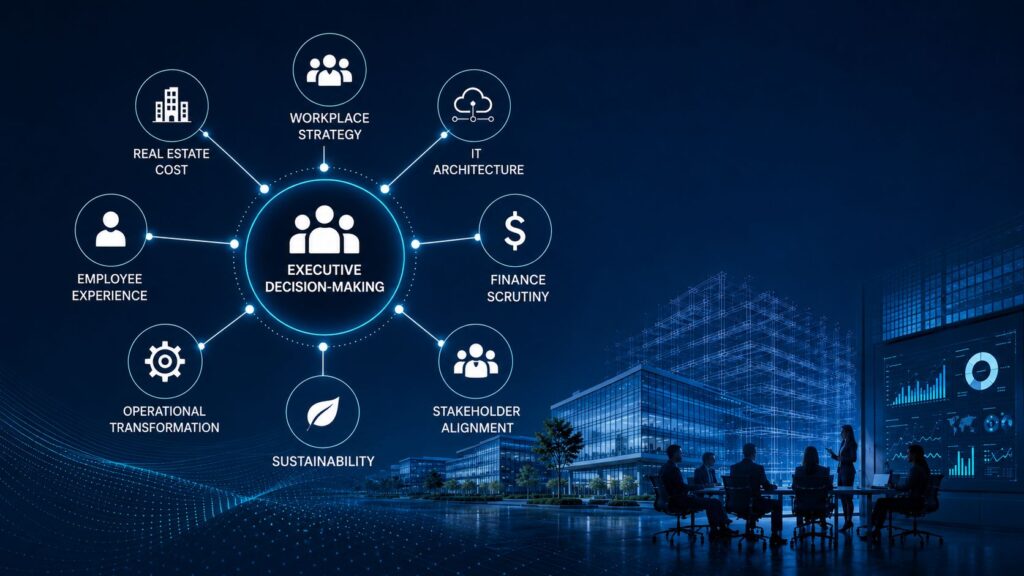
They now sit at the intersection of workplace strategy, real estate cost, employee experience, operational transformation, sustainability, IT architecture, finance scrutiny, and executive risk.
That changes how customers assess and procure these solutions. It should also change how they are sold.
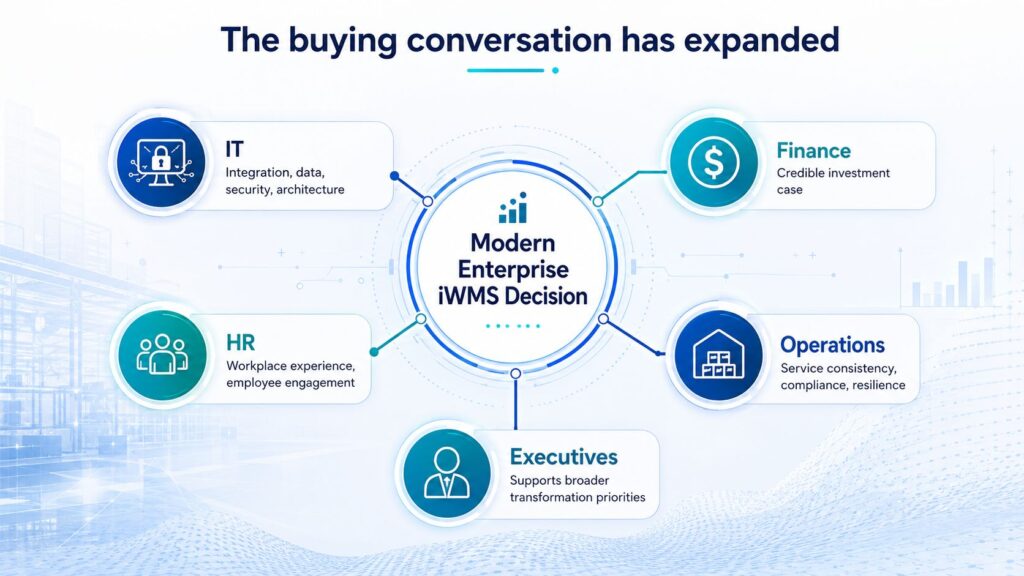
A modern iWMS decision may still include facilities management and corporate real estate, but it rarely stays there.
That creates a more complex and demanding commercial environment.
Why traditional iWMS selling falls short
Many iWMS opportunities still start as product conversations.
The customer defines requirements. Vendors respond with functionality. Demonstrations are shaped around modules, workflows, data, dashboards, integrations, and implementation approach.
Those things matter. But they are no longer enough.
In complex enterprise opportunities, the buying challenge is often not whether the product can do the work. The harder problem is whether the customer organisation can agree on the problem, justify the investment, manage the change, and create confidence that the expected outcomes will be realised.
When sellers focus too narrowly on product capability, several risks appear.
The business problem remains vague. Stakeholder priorities stay disconnected. The value case is underdeveloped. Finance sees cost before impact. IT sees integration risk. Executives see another transformation initiative competing for time, attention, and capital.
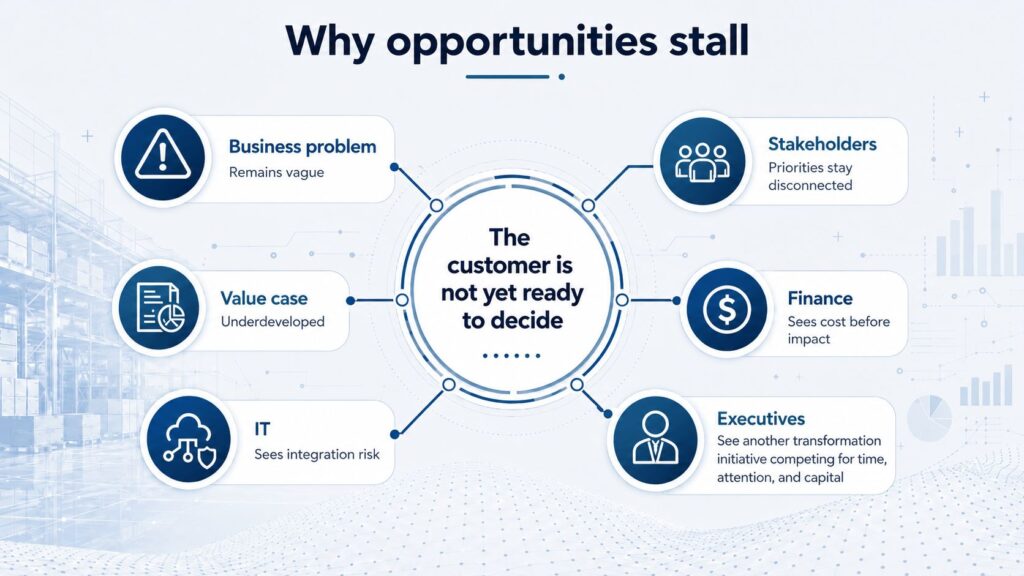
Opportunities aren’t lost or stalled because solutions are weak, but rather because customers are unable to decide.
What customers need before they can decide
Enterprise customers need more than information about the system.
They need clarity.
They need to understand what operational problem is being solved, why it matters now, who is affected, what value is expected, what risks need to be managed, and how success will be recognised after implementation.
They also need alignment.
Facilities, real estate, IT, finance, operations, HR, procurement, and executive sponsors may all see the opportunity differently. Each group brings its own priorities, concerns, language, and measures of success.
If those perspectives are not connected, the opportunity becomes fragmented. The seller may have activity, meetings, demonstrations, and positive feedback, but no shared decision logic inside the customer organisation.
That is where many complex iWMS opportunities lose momentum.
The customer does not only need to select software. The customer needs to build confidence in a decision about operational change.
What iWMS sellers need to do differently
iWMS sellers need to move earlier and higher in the customer conversation.
They need to diagnose value, not only demonstrate functionality. They need to help customers define the business problem, not only respond to requirements. They need to map stakeholder priorities, not only manage contacts. They need to create a shared view of success, not only present solution benefits.
Sellers need to ask better questions about the customer’s goals, constraints, decision process, readiness, risk, value expectations, and competing priorities.
They need to connect iWMS capability to business outcomes that matter to the customer, such as portfolio efficiency, operational visibility, service performance, employee experience, sustainability reporting, cost control, compliance, and better executive decision-making.
They also need to help the customer understand what must be true for the initiative to succeed.
Who needs to be aligned? What evidence is required? What risks could delay the programme? What business outcomes should be measured? What does success look like for facilities, IT, finance, operations, and executive sponsors?
These questions change the seller’s role.
The seller is no longer only presenting a system. The seller is helping the customer create the conditions for a confident decision.
That requires a different commercial discipline.
The challenge for iWMS sellers is clear
Those who can help customers move from fragmented needs to a shared transformation vision will be better positioned.
Those who can connect iWMS capability to business outcomes will be more credible.
Those who can help customers reduce decision risk will have an advantage in complex enterprise opportunities.
Selling into that environment requires more than a strong product. It requires better questions, stronger alignment, clearer value logic, and a more disciplined way of helping customers make decisions they can act on.
Enterprise iWMS selling is no longer only about proving what the system can do. It is about helping customers build the confidence to decide, act, and realise value.